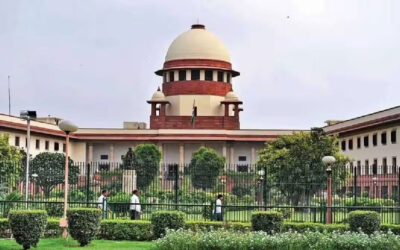
Several landmark cases and key doctrines shaped Indian service law in 2025, reflecting judicial trends toward fairness, administrative accountability, and evolving principles in public employment. These decisions covered crucial aspects: reservation, recruitment, appointment, regularisation, pension, integrity, and procedural safeguards.
Appointment and Recruitment
The Supreme Court and various High Courts addressed diverse issues in the sphere of recruitment and appointment:
- In Archana v. Union of India (Delhi HC), the Court struck down gender-based discrimination in the appointment to the Indian Air Force. It directed that unfilled vacancies, previously reserved only for men, be made available to qualified women, solidifying the doctrine of equality and non-discrimination in public employment.
- In Nikhil Kumar v. Union of India (Supreme Court), notice was issued regarding irregularities and lapses in the conduct of examination processes by the Staff Selection Commission (SSC). This case demonstrated judicial oversight over recruitment transparency and highlighted the need for robust procedural fairness in public examinations.
- In Sagar Dattatray Chorghe v. State of Maharashtra (Bombay HC), the Court reaffirmed the principles from the Anjuman Trust case, emphasizing that recruitment notifications and rules must be interpreted strictly according to their wording—arbitrary or ad hoc interpretations are impermissible.
Doctrine of Fairness and Regularisation
A major theme in service law cases of 2025 was the regularisation of employees and fairness in service matters:
- In Hari Ram v. State of Haryana (P&H HC), the Court directed the regularisation of daily wage workers, emphasizing that fairness requires that long-serving public sector employees should not be left in uncertainty about their job status. The Court ordered a strict time-bound implementation of its order, reinforcing judicial insistence on compliance and equity in service decisions.
- Several courts, including the Punjab & Haryana High Court, ruled that appointments based on forged documents were void ab initio, reiterating zero tolerance for fraud in public employment.
- In matters of compassionate appointments, courts stressed the need for a balanced, humane application of eligibility norms and cautioned against retroactive disqualification for reasons such as family size after many years of service.
Integrity, Discipline, and Service Termination
2025 saw the judiciary reinforce mandatory inquiry and procedural safeguards in cases of stigma and allegations related to integrity:
- In Prakash Manda v. Rajasthan State Road Transport Corporation, the Rajasthan HC quashed a termination order grounded on questionable integrity without an inquiry, stating that such orders are stigmatic and require an opportunity for defence through a fair process.
- Across judgments, the Court consistently held that due process and opportunity to be heard are integral in disciplinary actions, ensuring that punitive decisions are not arbitrary.
- Enforcement of rules on forged documents, unauthorized absence, and non- conduct of departmental inquiries also remained at the forefront, as exemplified by the Jaya Bhattacharya v. State of West Bengal & Ors. decision, where the Supreme Court intervened to redress denial of pensionary benefits post regularization, laying emphasis on inquiry, equity, and transparency in administrative processes.
Reservations, Migration, and Seniority
Important service law decisions in 2025 clarified the scope and application of reservation, migration between categories, and seniority principles:
- The Supreme Court pronounced that reserved category candidates who meet merit and score above unreserved cutoffs should be entitled to migrate and be recruited against general category positions when recruitment notifications permit, thereby balancing affirmative action with recognition of individual merit.
- In recruitment for designated posts (such as Head Constable Ministerial in the BSF), the Supreme Court upheld the finality of the Review Medical Board’s decisions, resolving uncertainties regarding further appeals or medical examinations, and solidifying the principle of administrative finality in service law.
Pension Rights, Benefits, and Family Welfare
Denial and grant of pensionary benefits, particularly regarding unregularized employees, family pensions for dependents of deceased employees, and benefits for contractual/ad hoc staff, continued to generate landmark rulings:
- Courts mandated that denial of pension or family benefits must be justified by explicit conduct or clear violation of service rules, ensuring that administrative discretion does not override fundamental rights.
- Exceptions are carved when rule-based exclusion would result in injustice, such as the Supreme Court’s intervention in cases where pension was denied despite regularization or long service.
Evolving Judicial Attitudes and Administrative Law Principles
The evolving landscape of service law in 2025 is marked by several judicial trends:
- Increasing insistence on time-bound compliance and procedural safeguards for employees challenging adverse orders and seeking regularization or promotion.
- Courts limit their authority to situations involving gross procedural irregularity, discrimination, or breach of statutory rules, reinforcing judicial restraint in reviewing purely administrative matters unless fundamental rights are at stake.
- The balance between efficiency, fairness, and equity is at the heart of judicial interventions in service disputes.
Conclusion: The Service Law Landscape
The year 2025 showcases the Indian judiciary’s ongoing engagement with service law through landmark decisions that reinforce rule-based public employment, gender justice, procedural fairness, integrity, migration rules, and benefit entitlements. Courts have prioritized non-discrimination, transparency in recruitment, prompt remedy for procedural lapses, equity for long-serving staff, and robust deterrence against fraud and misconduct.
- Doctrine of strict interpretation for recruitment rules, advertisements, and procedural guidelines.
- Principle of equality, especially in gender and category-based employment issues.
- Doctrine of fairness and equity in regularisation and compassionate appointments.
- Doctrine of mandatory inquiry and natural justice in disciplinary matters.
- Strict adherence to administrative finality, especially in recruitment, medical examination, and pension claims.
- Judicial restraint in service matters, intervening primarily in instances of
- procedural irregularity or denial of statutory/constitutional rights.
These evolving doctrines and cases collectively guide the jurisprudence in Indian service law, protecting both government interests and employee rights while reinforcing administrative accountability and procedural justice.